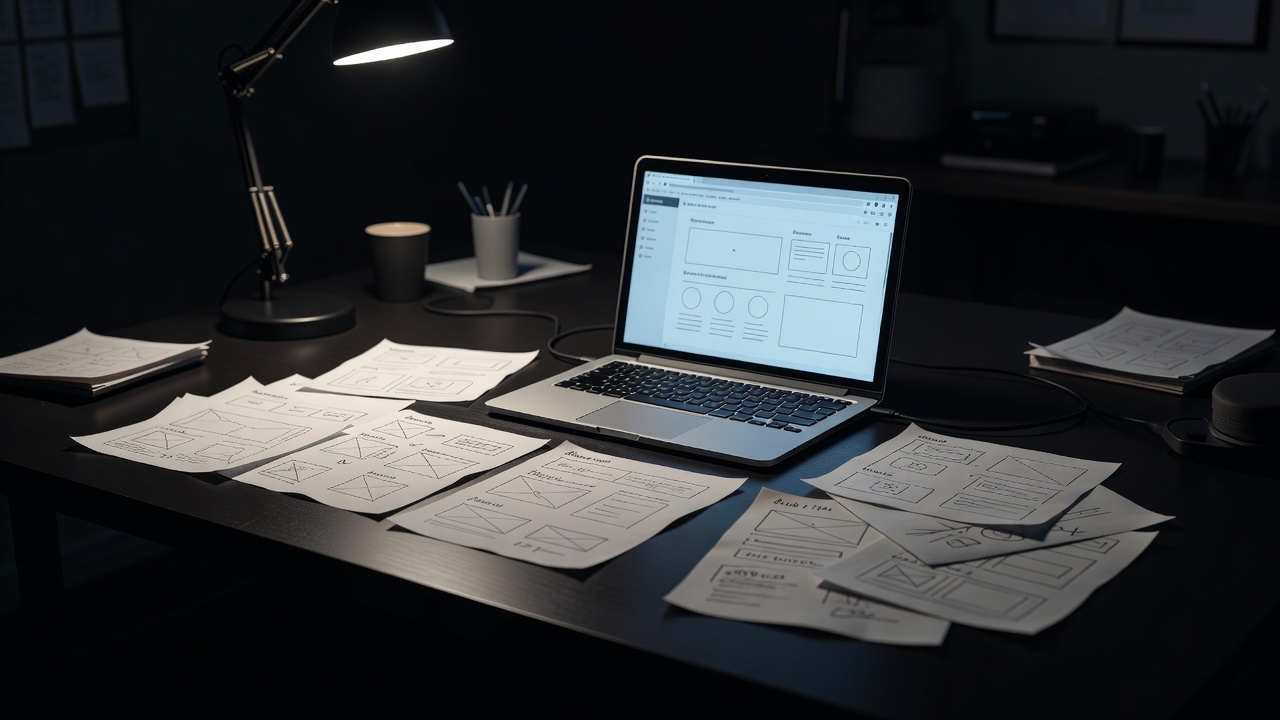
Write the site brief before opening the editor
A portfolio, a local service business and a publication may all need a home page, but they do not have the same requirements. List the pages you must publish, the actions visitors should take and the people who will maintain the content. Add the features that would block launch if absent: appointments, a product catalog, multiple authors or a specific integration.
Then distinguish a requirement from a preference. A booking workflow that complies with your business process is a requirement. A particular animation usually is not. This separation prevents a polished demo from outweighing the less glamorous question of whether the service can do the work.
A contextual shortlist, not a universal winner
Wix is our starting candidate for a buyer who wants visual control within a hosted environment. The attraction is assembling a site without separately operating a hosting stack. The trade-off is platform dependence: moving away is not equivalent to copying the exact site into another editor. Check whether the relevant app, payment workflow or business feature belongs to the plan you are considering.
Its free offering can help you learn the editor and publish a limited starting site. It should not be confused with an unrestricted professional setup on your own domain. Check current branding, domain and storage conditions before treating a prototype as your final public presence. Skip it if portable source files are a non-negotiable requirement.
Squarespace is a candidate for people who prefer a template-led approach to a portfolio or business presentation. A stronger visual starting point can reduce design decisions, but templates do not write clear copy or organize a complicated service offering. The product offers a trial rather than a permanent free publishing tier; evaluate the full renewal commitment before launch.
Do not assume that an export reproduces every layout, commerce setting or integration elsewhere. A content export and a complete operational migration are different projects. If your future plan involves custom application logic, confirm that the platform's supported extensions and developer options actually cover it rather than relying on appearance alone.
WordPress.com is our publishing-oriented candidate when articles, categories and an evolving content archive are central. It is a hosted service and is not identical to downloading WordPress from WordPress.org and arranging your own hosting. Plan-specific boundaries affect domains, customization and other capabilities. Compare the hosted plan you will buy, not a feature demonstrated in an unrelated WordPress installation.
Choose a different route if you need control that the selected plan does not provide. WordPress's broader ecosystem is useful context, but it is not a guarantee that any plugin or workflow is available in every hosted account. Document the required capabilities before committing to a yearly payment.
Compare ownership and recurring costs
Check who controls the domain registration, which account receives renewal notices and how you would transfer the domain. Keep business-critical accounts under an address your organization controls. Domain ownership should not depend solely on a departing freelancer's personal login.
Look beyond the advertised entry rate. Renewal prices, taxes, email hosting, paid apps, transaction charges and appointment features may affect the total. We avoid quoting a single price here because plan terms and regional offers vary. Compare the actual checkout and renewal terms for your intended configuration, then save a copy for your records.
Audit the visitor experience yourself
Build a small pilot with real headings, images and a representative form. Navigate it with a keyboard. Check text contrast, useful image descriptions and the order of headings. Review the Web Content Accessibility Guidelines as a reference; selecting a template does not automatically make a completed site accessible.
Test the mobile experience on actual narrow screens, not only in an editor preview. Confirm that a contact route works, images are appropriately sized and essential information does not disappear. A builder's SEO controls can help manage metadata, but no setting guarantees search rankings or meaningful traffic.
Make leaving part of the evaluation
Export sample content before launch and inspect what you receive. Keep separate copies of source text, original images, product records and domain details. Record which parts would need rebuilding if you moved. The objective is not effortless migration; it is knowing the likely effort before your entire business presence depends on the platform.
These are desk-research judgments about fit and trade-offs, not measured uptime, speed or conversion results. If your main need is an internal knowledge space rather than a public website, a work app may be the more appropriate category.
Official sources
Check current offerings at Wix, Squarespace and WordPress.com pricing. For the separate open-source project, see WordPress.org.
Who should skip a hosted builder?
Consider another architecture when strict portability, unusual application behavior or specialized infrastructure control matters more than managed convenience. That alternative brings its own maintenance responsibilities.